

CARPETDEPO KNOWLEDGE BASE · Our Expert Guide · Updated: 5 November 2026
When choosing a machine-made carpet, as well as the colour and pattern, it is worth finding out about the material, the fineness of the weave, the weight and the pile height. These details tell us what kind of surface, feel and practicality we can expect from the chosen rug.
At CarpetDepo, we help ensure that your rug suits both your home and everyday use. In this guide, we explain the most important specifications of machine-made rugs, with a special focus on Turkish polyester and Iranian acrylic carpets. We’ll also explain what the terms REEDS, PICKS, POINTS and KNOTS on English product specifications mean.
What makes a machine-made carpet good?
The right raw materials, well-designed yarn, an even and sufficiently dense weave, and careful craftsmanship. We assess the weight and knot count alongside these factors. A higher number is a real advantage only if we know what it measures and the carpet is suitable for its intended use.
Quick guide to the article
Manufacturing · REEDS, PICKS, POINTS, KNOTS · Reading the specification sheet · Weight and pile weight · Yarn height · Turkish polyester · Iranian acrylic · Comparison · Purchasing checklist
How are machine-woven carpets made?
The term ‘machine-made carpet’ can cover several different manufacturing processes. In this article, we will primarily focus on woven, pile-faced rugs. The structure and interpretation of the specifications for tufted, flat-woven or printed patterned carpets may differ.
To understand the manufacturing process, it is worth distinguishing between three groups of yarns. The warp yarns run along the length of the carpet, the weft yarns interlace the structure crosswise, whilst the pile yarns provide the soft, patterned walking surface.
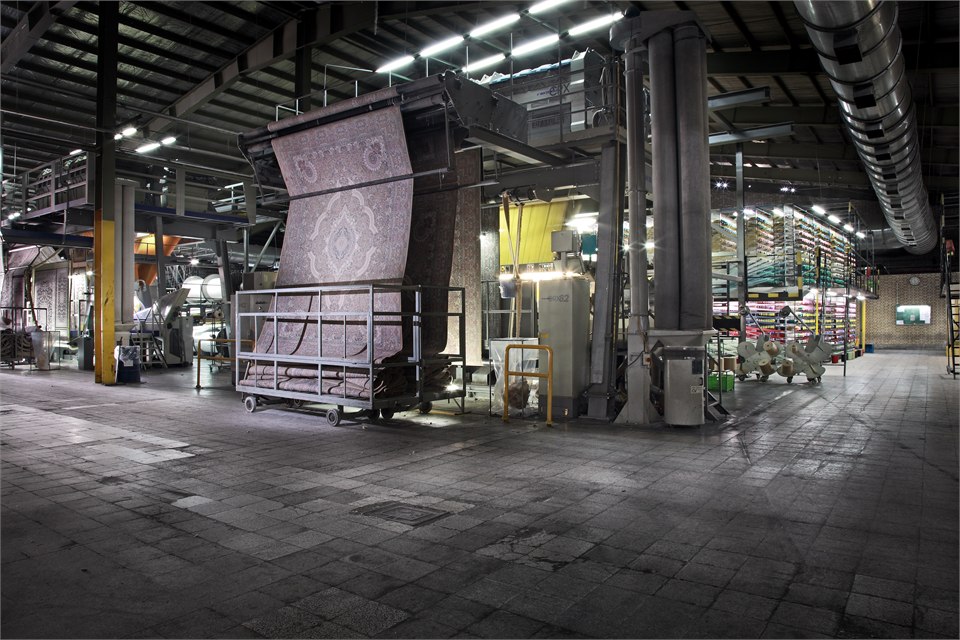
In the common face-to-face weave, two base fabrics are produced facing each other. The pile yarns running between them are cut in the middle , thus creating two carpet surfaces. The finished weave is followed by further processes: for example, surface shearing, finishing the backing, cutting to size and hemming. The entire process contributes to the quality. [1]
What do REEDS, PICKS, POINTS and KNOTS mean?
These four figures relate to weaving, but they measure different things. REEDS and PICKS typically refer to weaving specifications given in one direction. POINTS and KNOTS may refer to quantities projected onto the surface of the finished rug. Always check the term and unit of measurement first.
| Notation | What does it represent? | Common unit |
|---|---|---|
| REEDS | Reed spacing across the weaving width; associated with the Iranian term shaneh. | Reeds/m, dents/m |
| PICKS | Number of weft insertions, counted along the rug’s length. | Picks/m, picks/cm |
| POINTS | Number of pile-yarn ends forming points at the surface. | Points/m², points/SQM |
| KNOTS | Number of pile-binding units counted as knots by the manufacturer. | Knots/m², knots/SQM |
SQM is the abbreviation for ‘square metre’. On smaller screens, the table can be scrolled horizontally.
REEDS – reed spacing across the weaving width
A reed is the comb-like component of a weaving loom. It arranges and guides the warp threads and beats the weft into place. Its spacing is related to weaving fineness across the rug’s width. [2]
Iranian machine-woven rugs often carry labels such as 700, 1,000, 1,200 or 1,500 reed. The units Reeds/m and dents/m refer to reed divisions per metre of width. For example, 1,200 dents/m means 12 divisions per centimetre. The Persian term shaneh is associated with this parameter. [3]
A higher value can allow a finer pattern across the width. 1,200 reed does not mean 1,200 knots per square metre or the total number of warp threads. Several threads can pass through one reed gap; the manufacturer’s use of commercial labels should also be clarified.
PICKS – number of weft insertions
A pick is a weft insertion. The weft thread runs across the width, but successive insertions are counted along the rug’s length. Picks/m therefore states the number of insertions per metre of length. [4]
For example, 3,600 picks/m means 36 weft insertions per centimetre. It does not automatically mean the same number of pile or knot rows at the surface: the weave construction also matters. Iranian specifications sometimes call lengthwise density density or tarakom; the unit still needs to be checked.
POINTS – number of pile-yarn ends at the surface
In machine-woven cut-pile rugs, points usually counts the pile-yarn ends visible at the usable surface. Points/m² is the number of points per square metre. The count refers to yarn ends, not to each individual fine fibre making up a yarn. [5]
A higher point count can allow a more detailed pattern. A small leaf or flower can be drawn with more distinct points. Softness and durability also depend on yarn thickness, material, yarn construction and pile height.
KNOTS – the “knot count” of a machine-woven rug
Knots/m² is the stated knot count per square metre. For machine-woven pile rugs, it refers to the pile-binding units that the manufacturer counts as knots. The term alone does not imply that the rug was knotted by hand.
One pile-binding unit may have two yarn ends at the surface. With that counting method, the point count can be twice the knot count. We apply this conversion only when the manufacturer’s data or calculation method confirms it for the particular rug. Other constructions and differently used labels need separate clarification.
One data sheet, four figures: how to interpret them together
We’ll illustrate the difference using the manufacturer’s specifications for the Shahrokh Tagh Bostan acrylic rug. The following values are listed for the same product. [6]
| Data from the original data sheet | Value |
|---|---|
| Reeds/M | 1 200 |
| Picks/M | 3 600 |
| Knots/SQM | 1 440 000 knots/m² |
| Points/SQM | 2 880 000 points/m² |
In this example, 1.44 million knots and 2.88 million points describe the same carpet. The number of points is twice the number of knots because the manufacturer calculates the surface units in two different ways.
However, the point count of the finished carpet cannot be directly deduced from the 1,200 × 3,600 product. To understand the relationship between the weft insertions and the pile knots, we need to know the weave structure. We therefore request the point/m² or knot/m² value specified for the finished product for the purposes of comparison.
How many knots or points make a machine-made carpet good?
A higher value, calculated in the same way, may offer an advantage in the detailing of the pattern. However, when assessing quality, we also take into account the yarn material and thickness, the density of the surface, the pile height and the construction of the backing are also taken into account. Many fine yarns and fewer thick yarns create a different surface. The weave density and the properties of the yarn together affect the carpet’s suitability for use. [7]
As a consumer, we recommend that you compare carpets made of similar materials and with similar pile heights, using data specified in the same units. ‘500,000 points’ and ‘1,000,000 knots’ are two different specifications. First, their meanings must be clarified; only then can conclusions be drawn from the figures.
What does the machine-made carpet weight mean?
Weight is usually stated in g/m² or kg/m². 2,500 g/m² is the same as 2.5 kg/m². Check whether the figure refers to one square metre, the whole rug or the packaged product.
Total weight and pile weight: what are we measuring?
The total weight includes every component of the rug: pile yarn, base construction and any backing layers. Pile weight refers to the pile yarn. For terms such as face weight and surface pile weight, we also check exactly what the stated measurement includes.
On technical data sheets, the two weight figures may be listed separately. For example, in the case of Balsan Mythique, the manufacturer specifies a pile weight of 1,250 g/m² and a total weight of 2,520 g/m². This example illustrates the difference between the terms; the product itself is a different type of carpet and is not the basis for the acrylic–polyester comparison. [8]
How to calculate the expected weight of a carpet
A 200 × 300 cm carpet has an area of 2 × 3 = 6 m². If the total weight is 3.2 kg/m², then the calculated net weight per piece is:
6 m² × 3.2 kg/m² = 19.2 kg
We can also work it out the other way round: a 160 × 230 cm piece with a net weight of 8.8 kg has an area of 3.68 m². The specific total mass is 8.8 ÷ 3.68 ≈ 2.39 kg/m².
Illustrative calculation examples. The actual weight is also influenced by dimensional and manufacturing tolerances; the weight of the packaging must be treated separately.
Is a heavier carpet of better quality?
With a similar construction, a higher pile weight may indicate more pile yarn. However, a higher total weight can also come from a thicker base or backing layer. We therefore do not use figures of 2 or 2.5 kg/m² alone as universal thresholds for quality grades.
It is worth considering the weight in conjunction with the pile height and density. A short-pile, finely woven carpet may actually be lighter than a piece with longer pile. We also assess the need for an anti-slip underlay separately: for this, we must understand the relationship between the floor and the backing.
Pile height, thickness and softness
The pile height refers to the height of the tufted walking surface. The total thickness includes the base structure, so the two figures may differ. When comparing, always place data with the same name side by side.
- A shorter, more compact surface is worth considering in the dining room and along frequently used routes. Check how a chair moves across it and whether it fits under the door.
- A longer, softer surface can be pleasant next to the bed or in a relaxation area. It may require more attention when cleaning and may show marks from furniture legs.
- With an embossed, high–low pattern, the surface is deliberately designed with varying heights. A single millimetre measurement does not necessarily describe the entire surface.
CarpetDepo’s advice: assess softness by touch, and expected durability based on the overall construction and the room itself. Thickness and the softness felt at first touch do not, on their own, indicate long-term shape retention. [9]
Turkish polyester carpets: what should you know about them?
Machine-made polyester carpets can be produced with a variety of surfaces, ranging from soft to glossy or matt. PES stands for polyester; PET is the type of polyester used in carpets. PP, on the other hand, stands for polypropylene, a separate raw material. In addition to the product name, let’s also look at the exact percentage composition.
By designing and combining the yarns, it is possible to create flatter or embossed surfaces with varying degrees of sheen. In Turkish yarn production, polyester is used both on its own and in combination with other fibres. The term ‘Turkish polyester’ can therefore cover a wide variety of structures and quality levels. [10]
Things to look out for when choosing a polyester carpet
- The density of the surface: given a similar pile height, how even and full is the walking surface?
- The yarn construction: how does it respond to smoothing, and how striking is the pile pattern?
- The direction of the light: the carpet may appear lighter from one side, darker from the other. This can be caused by the sheen of the yarn and the direction of the pile, so it is worth viewing it from several angles. [11]
- Ease of cleaning: the fact that the material is listed as ‘polyester’ does not in itself guarantee that the entire carpet is machine-washable. The backing and finish also matter.
For the living room or bedroom, appearance and softness may also be important considerations. For areas subject to heavier use, pay particular attention to density, pile height and the specific product’s usage recommendations. We have produced a separate guide on care: cleaning and caring for polyester carpets.
Iranian acrylic carpets: delicate patterns and a wool-like feel
Acrylic is a synthetic fibre that can produce a soft, wool-like surface. The properties of the finished rug depend on the yarn quality, weave and backing together. [12]
One of the attractions of fine Iranian acrylic carpets is the richly detailed Persian pattern design. The finer yarn and dense weave allow for tiny flowers, tendrils and neat contours. The fine weave may also be accompanied by a shorter pile height; the manufacturer’s example of 1,200 reedes shown earlier features a pile height of approximately 6 mm.
What does ‘heat-set acrylic’ mean?
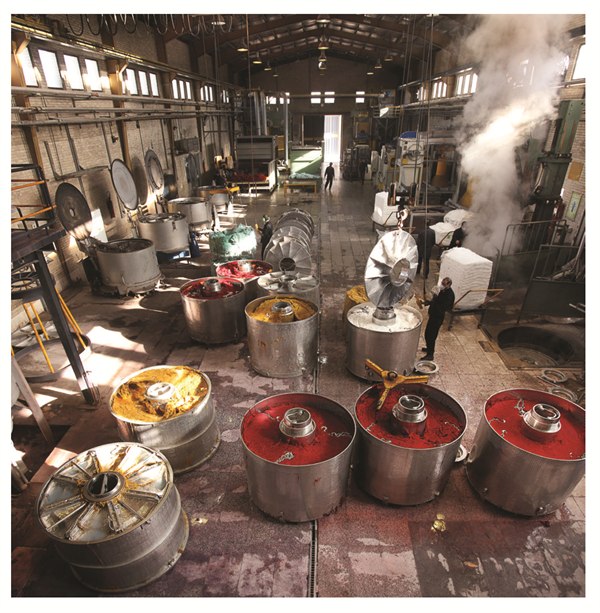
Heat-set refers to yarn that has been fixed by heat treatment. The treatment stabilises the yarn’s twist and volume, thereby helping to preserve the appearance of the carpet’s surface. Heat treatment is a separate manufacturing process and can also be applied to other types of carpet yarn. [13]
The ‘heat-set’ label should be interpreted in conjunction with the yarn’s other specifications. It does not imply unlimited wear resistance or complete lint-free properties, nor does it, on its own, authorise the cleaning of the finished carpet with hot water or steam.
What should you know about initial shedding?
With new acrylic carpets, loose fibres left over from the manufacturing process may gradually shed. Regular, gentle vacuuming can help to remove these. However, if you notice increasing fibre loss, thinning patches or bald spots, it is worth reporting this and having it checked. [14]
We provide a detailed guide to caring for acrylic carpets here: cleaning and caring for acrylic carpets.
Turkish polyester or Iranian acrylic: which should you choose?
We start by considering the room, the desired look and the intended use. There are several different constructions within both groups, so it is worth comparing the specific product’s specifications and surface finish.
| Criterion | Polyester machine-made carpet | Acrylic machine-made carpet |
|---|---|---|
| Appearance | It can be produced with soft, matt or glossy finishes, as well as embossed surfaces. View it from different angles. | A wool-like feel and delicate Persian patterns are also available. Examine the details and the evenness of the surface. |
| Weaving specifications | Check whether the specification sheet states stitches per square metre or knots per square metre. | In addition to the reed, check the pick count and the number of stitches or knots in the finished product. |
| Common uses | Pay particular attention to the density, the yarn construction and the lay of the fibres. | Assess the quality of the yarn, the density, the pile height and the stability of the weave as a whole. |
| Care | Choose a cleaning method suitable for the entire fabric; the fabric name alone is not sufficient to determine washability. | Ensure you vacuum gently and treat stains promptly. The reverse side must also be taken into account. |
In the living room, walking patterns and furniture placement; in the dining room, the movement of chairs and ease of cleaning; in the bedroom comfort when walking barefoot may be the starting point for your decision. Please check separately whether a particular product is suitable for use with a castor-fitted office chair or underfloor heating.
The reverse side, the edging and the finish all matter
The material of the pile and the composition of the base fabric are separate details. The base may consist of cotton, jute, polyester or combinations thereof. When labelled ‘100% acrylic’ labelling, we therefore clarify whether the manufacturer is referring to the pile yarn. Jute, for example, may also be present as a weft yarn; its exact role can be determined based on the specific construction.
As well as the surface, check that the edging is even, the corners are neat, the reverse side is intact, and the fringes . Ask for help in assessing the waviness of a freshly rolled-up rug; do not attempt to alter its structure by pulling hard or using hot steam.
When it comes to certificates, we also look for the exact details. The OEKO-TEX® STANDARD 100, for example, is a label relating to testing for harmful substances, not an abrasion resistance rating. [15]
Check these eight things before buying
- Intended use: where will the carpet be laid, how much footfall will it receive, and what sort of furniture will be placed on it?
- Material composition: what is the pile yarn made of, and what is the backing made of?
- Weave specification: does the data sheet specify ‘reeds’, ‘picks’, ‘points per m²’ or ‘knots per m²’? Is the method of calculation known?
- Weight: is it the total weight or the pile weight, and is the figure per square metre or per piece?
- Pile height: has the pile height or total thickness been specified? Is it suitable for doors and chairs?
- Finish: what is the condition of the surface, the reverse side, the edging, the corners and the fringes?
- Care and flooring: how should it be cleaned, is an underlay required, and is it suitable for the specific floor?
- Value for money: are you comparing items of the same size, similar construction and clearly stated units of measurement?
When choosing online, photos of the entire surface, the reverse side and the material label are also useful. Ask for a close-up of the edging, and view the colour under as many different lighting conditions as possible. If you are unsure how to interpret the details, please send us the product link.
Frequently asked questions about machine-made carpet specifications
Is 1,200 reed the same as 1.2 million knots?
1,200 reed refers to the width of the weave. 1.2 million knots per square metre refers to the number of knots per unit area. The two values do not directly correspond: we also need to know the lengthwise data and the weave pattern.
Can the number of points always be divided by two?
In the manufacturer’s example shown, yes: 2,880,000 points/m² corresponds to 1,440,000 knots/m². However, as a general conversion, we should only use this with a verified calculation method, as the terminology and structures may vary.
Is a thicker and heavier carpet definitely more durable?
Durability is influenced by the yarn, the weave and the overall construction. Thickness provides an indication of both comfort and construction, whilst the total weight also includes the backing. We assess these two factors in conjunction with the intended use.
Is a ‘silk-effect’ machine-made carpet made of silk?
‘Silk-effect’ describes the appearance. The sheen can also be achieved using polyester, viscose, modal or other yarns. The natural silk content can be verified by the exact percentage composition.
What might explain the price difference between two similar rugs?
The raw material, the fineness and quantity of the yarn, the weave structure, the pattern details and the finish may all differ. It is best to first compare pieces of the same size and similar construction, then see which ones have the specifications and characteristics that best suit your intended use.
Watch a video showing how machine-made carpets are manufactured
In the video posted on the CarpetDepo channel, you can see footage of the production of polyester machine-made carpets.
We’ll help you find the right machine-made carpet for your home
Tell us where the carpet will go and send us a link to the piece you’ve chosen. We’ll help you understand the material, the pile and density specifications, the weight and the pile height.
Professional resources and manufacturer data sheets
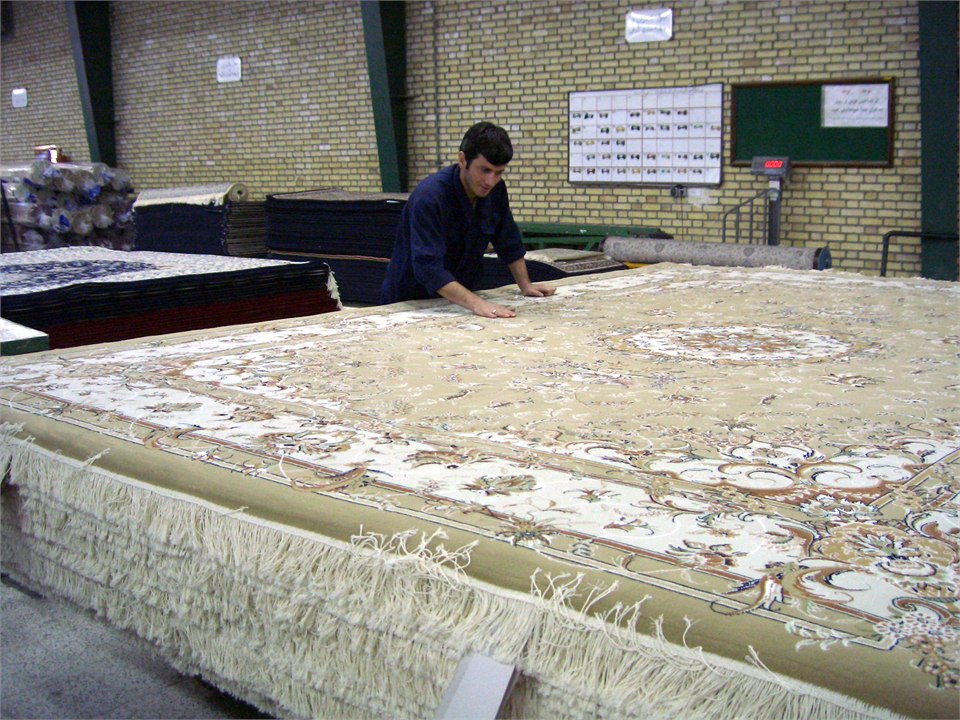
Our guide is supported by manufacturers’ and industry descriptions. The external product examples help to clarify the concepts; we can provide an accurate comparison based on the data sheet for the carpet you have chosen. The factory photos are taken from CarpetDepo’s own archive and show the manufacture of acrylic carpets.
- Vandewiele – face-to-face weaving and carpet structure
- Groz-Beckert / Steven Reeds – the function of the reed
- Vandewiele – reed fineness in dents/m
- CottonWorks – warp yarn, weft yarn and basic weaving concepts
- Shahrokh – reed marking and surface count
- Shahrokh Tagh Bostan – product details for the featured acrylic rug
- Carpet and Rug Institute – The Carpet Primer
- Balsan Mythique – total and pile weight
- Floor Covering Reference Manual – choosing the right carpet for the job
- Korteks – polyester carpet yarns
- Royal Halı – user guide, surface and pile direction
- Royal Halı – carpet yarns and structural elements
- Superba – heat treatment of carpet yarns
- Shahrokh – care of acrylic carpets and fibre shedding
- OEKO-TEX® – what the STANDARD 100 certificate covers