
Rug guides
How to hang a kilim rug on the wall
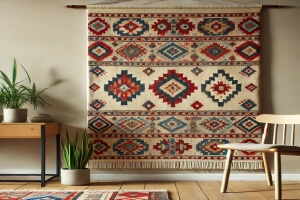
Wall rugs bring warmth and texture to a room and give plain walls a distinctive finish. A handwoven kilim is light enough for many mounting methods, and its colours and patterns make it a natural focal point. This guide covers where to hang it, how to mount it securely and how to care for it.
CarpetDepo Rug Magazine
A wall rug can make a room feel warmer and more inviting while adding interest to a plain wall. Traditional handwoven pieces and contemporary designs can both work well. Besides adding colour and texture, a wall rug can help protect the surface behind it.
Kilims are especially popular with people who prefer natural materials and handmade textiles. Hanging one on the wall makes the most of its colours and pattern and can make the room feel cosier. This guide walks through choosing a spot and comparing frames, hooks, rails and other hanging methods.
Choosing a place for a kilim wall hanging
Kilims often look at home in a living room, bedroom, stairwell or dining room. Choose a dry, sound wall that can carry the rug and mounting hardware. A kilim typically weighs around 1.4 kg per square metre. A plain wall helps the design stand out, while patterned wallpaper can compete with it. For a poorly insulated wall, you may prefer a longer kilim with more coverage. A smaller piece can work well when the purpose is mainly decorative.
Look for colours and motifs that work with the rest of the room without disappearing into the wall colour. A brightly coloured kilim can enliven a light room. In a darker space, natural or pastel tones can give a softer effect. Keep the scale in proportion to the wall so the rug has a presence without making the room feel crowded.

Ways to mount a kilim
Because kilims are relatively light, you can choose a fixing method to suit the size of the piece, the wall material and the look you want. Options include a tack strip screwed into the wall, a curtain rod with clips, a mounting rail or hook-and-loop tape sewn to the rug and attached to a wooden batten. You can also sew evenly spaced rings to the back and hang them on matching wall fixings. One customer used nails and a hammer. For an antique or particularly valuable piece, consider asking a textile or framing specialist to mount it.

Why hang a rug on the wall?
A textile adds texture and warmth to a smooth or painted wall and creates a focal point. In a busy area it can also shield the wall from some marks and scratches. A large textile may soften echoes in a room. Above all, the pattern and colours let you display a piece that reflects your taste.
Preparing the wall and tools
Choose the spot
Pick a wall that shows the rug’s colours and pattern clearly. Avoid strong direct sunlight, which can fade the textile over time. Check that the size looks balanced against the wall and the surrounding furniture.

Gather the equipment
Depending on the method, you may need hooks, screws, nails, a hanging rod, double-sided mounting tape or a frame. Plasterboard and concrete may require different anchors. Use a tape measure and spirit level to mark the fixing points and keep the rug straight.

Six ways to hang a kilim
1. Frame it
A frame gives a clean finish and is well suited to artistic or antique pieces. Choose a frame that suits the textile and room. Have the rug supported on an appropriate backing with suitable clips or archival mounting materials to protect the fibres.

2. Use a hanging rod
Sew a sleeve along the back of the top edge and slide a rod through it. The rod supports the rug across its width so it hangs evenly.

3. Use hooks and cord
Small, light textiles can be supported at their edges or corners with cord attached to hooks fixed into the wall. This makes the rug easy to take down or reposition. Space the supports so the weight is distributed evenly.

4. Use hook-and-loop tape
Fasten one side of the tape to a batten and sew the other side to the back of the textile. Choose a system suitable for the rug and wall. Adhesive tape may grip poorly on rough surfaces, so check the installation before hanging the rug.

5. Use clips or small fixings
Decorative clips can create a relaxed finish on lighter textiles. Use padding where clips grip the fabric to reduce pressure. Avoid piercing a valuable rug or concentrating its weight at a few points.

6. Use a tension frame
A clamping or tension frame can hold the edges of a larger textile evenly. The result is a stable, flat display with a clean modern appearance.
Caring for a wall rug
Remove dust regularly
Wall rugs collect dust just as floor rugs do. Use gentle suction or a soft cloth to clean the surface without pulling the fibres. Check the material and colourfastness before using any moisture.
Deep-clean when needed
If a rug becomes visibly dirty or stained, use a gentle method suited to its fibres and test first on an inconspicuous area. For silk, valuable pieces or delicate handmade textiles, consult a rug-cleaning specialist.
Store it carefully
If you take the rug down for a while, clean and dry it first, roll it loosely and put it in a breathable storage bag. Keep it somewhere cool and dry. Use appropriate moth protection for wool if needed. Good storage helps prevent damp and damage.

Once the kilim is securely mounted, its weave and pattern can be enjoyed much like a painting. Browse CarpetDepo’s wall rugs.